

- Room 202, Building 7, No. 125, Yongjun Road, Dalingshan Town, Dongguan City.
Position:
/
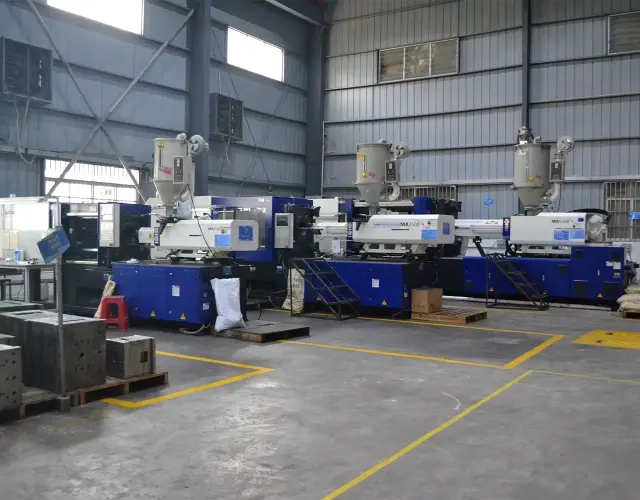
What Is Injection Molding?
Injection molding is a high-volume manufacturing process used to produce consistent plastic parts by injecting molten material into a precision mold. It is widely used for repeatable, tight-tolerance components where part quality, dimensional stability, and production efficiency are critical. Injection molding is ideal for mass production once a validated mold design is in place.
Our Injection Molding and Rapid Tooling Capabilities
We provide injection molding and rapid tooling solutions that enable fast mold development and stable, repeatable production.
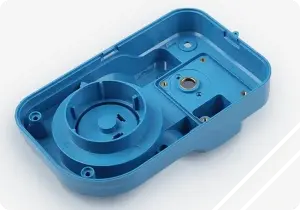
Plastic Injection Molding
Ideal for low-volume production of affordable, high-quality plastic parts, with consistent dimensions and repeatable quality.
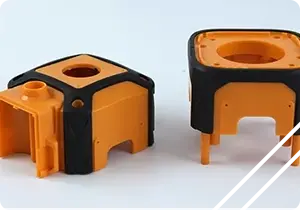
Overmolding
Combines multiple materials into a single part by molding a secondary material over a pre-molded substrate, improving grip, durability, and functional integration.
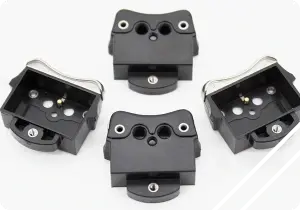
Insert Molding
Insert molding encapsulates metal or plastic inserts within a molded part during the injection process, enhancing structural strength, alignment accuracy, and assembly efficiency.
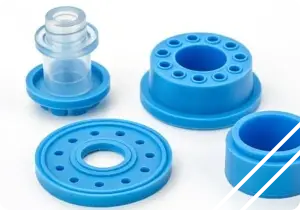
Liquid Silicone Rubber (LSR) Molding
Flexible, heat-resistant, and biocompatible parts with excellent consistency, making it ideal for medical, sealing, and high-performance applications.
Machines
50 to 3000 ton
Mold Cavities
Single, multi-cavity, and family molds
Mold Tool Material
Steel and aluminium
Mold life
500 to 1M+ shots (MOQ of 1)
Lead Time
T1 samples as fast as 2 weeks
Injection Molding Process Flow
Injection molding is a large-scale production method that involves injecting molten plastic under high pressure into a steel mold and then rapidly cooling it to form the product. The main process includes:
Raw material pre-treatment: Plastic particles drying (80 - 120℃ / 4 hours)
Melt injection: The screw is heated (at 180-300℃) and then subjected to high pressure (50-150 MPa) before being injected into the mold cavity.
Pressure retention cooling: Maintain pressure to compensate for shrinkage, and cool and shape (cycle 15 - 60 seconds)
Top-out picking: Mechanical pin demolding, with water-jet parts entering the post-processing stage
Popular Materials Used in Plastic Injection Molding
ABS (Acrylonitrile-Butadiene-Styrene)
Features: High strength, good impact resistance, easy to process
Applications: Electronic enclosures, toys, automotive interiors
PP (Polypropylene)
Features: Resistant to chemical corrosion, food-grade, lightweight
Applications: Packaging containers, medical supplies, household products
PE (Polyethylene)
HDPE (High Density): High rigidity, used for bottle caps, pipes
LDPE (Low Density): Good flexibility, used for films, hoses
PC (Polycarbonate)
Features: High transparency, impact resistance (bulletproof glass grade)
Applications: Optical lenses, safety helmets, electronic displays
PEEK (Polyetheretherketone)
Features: High temperature resistance (260℃), flame retardant,
biocompatible
Applications: Aerospace components, medical implants
TPU (Thermoplastic Polyurethane)
Features: Wear-resistant, high elasticity
Applications: Shoe soles, industrial hoses
PA (nylon)
PA6/PA66: resistant to wear and corrosion, used for gears and bearings
Glass fiber reinforced PA: strength increased by 50%, used for automotive structural components
We support a wide range of thermoplastics and engineering resins for injection molding. View our full materials list to evaluate material properties, typical applications, and molding suitability.
Material Selection in Injection Molding Part Design.
In the development of injection-molded products, the selection of materials directly affects the product's performance, cost, and production feasibility. It is necessary to comprehensively evaluate the three core dimensions:
Environmental Adaptation
High Temperature Environment: PEEK (Continuous
use at 260℃)
Food Contact: FDA Certified PP/PE
Outdoor Weather Resistance: UV Stable ABS
Mechanical performance requirements
Structural components: Preferentially use glass fiber
reinforced materials (such as PA6 + 30% GF, with
flexural strength of 200 MPa)
Flexible components: Select TPE/TPU (Shore hardness
ranging from 50A to 90D)
Cost and process balance
Mass production: General-purpose plastics
(PP/ABS) reduce unit cost
Precision parts: LCP (good fluidity, suitable
for thin walls)
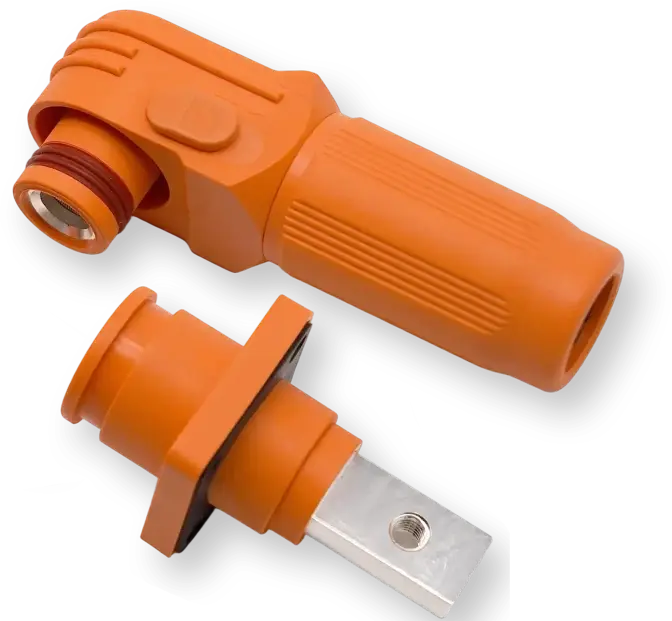
Advantages of Injection Molding
Injection molding is widely used to manufacture plastic parts that require consistent quality, precise dimensions, and high production efficiency. Once tooling is established, the process enables stable and repeatable output, making it suitable for both functional and appearance-critical components.
High repeatability
Tight dimensional control
Cost efficiency at scale
Material and design flexibility
Excellent surface finish
Why Choose Qiying for Custom Injection Molding?

Integrated Tooling and Production Support
Qiying handle both injection mold making and part production in-house, enabling better control over lead time, quality, and design consistency from tooling to mass production.

Material and Process Expertise
With extensive experience across a wide range of thermoplastics and engineering resins, Qiying help optimize material selection and molding parameters to balance performance, cost, and manufacturability.

Precision and Repeatability
Qiying molding processes are designed to deliver consistent dimensions, stable quality, and reliable repeatability, meeting the requirements of functional and appearance-critical plastic parts.

From Prototype to Production
From rapid tooling and low-volume runs to full-scale production, Qiying support flexible manufacturing volumes while maintaining process stability and part quality.
Get In Touch
undefined